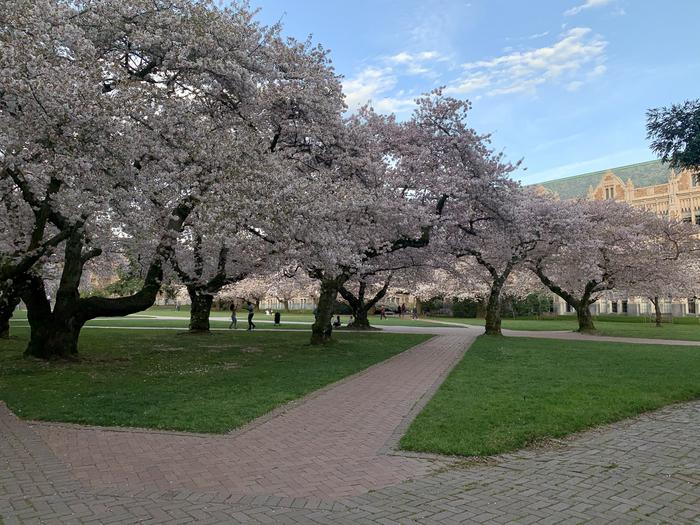
We’re in peak cherry blossom season, with crowds flocking to the University of Washington quad and other spots in the city that are bursting with pink blooms. Our Seattle Center Promotion and Publicity Records (Record Series 7613-01) include a folder documenting early years of Seattle’s Cherry Blossom Festival.
The 1979 festival included a tea ceremony; performances of various kinds; Japanese films; exhibits of kimonos, dolls, books, and art; kite flying; a Japanese garden, and demonstrations of origami, calligraphy, and flower arranging. The program highlighted the Seattle debut of Ondeko-za, a traveling drum group that was to perform at the International Fountain.
ONDEKO-ZA translates into “demon drum group”: a commune of young men and women dedicated to the preservation and performance of the ancient folk music and rituals of Japan. Their repertoire consists of music played on a variety of traditional festival drums, one weighing 700 pounds. This drum is carved from a 400-year-old tree and is raised 10 feet in the air during performances. Other instruments are the shamisen, flute , koto, shakuhachi , and bamboo fue. The music originates from classical Kabuki plays and folk festival traditions, dances, songs, and theatre.
By 1981 the festival had expanded from two days to three. Performing arts included kendo, buyo, aikido, and koto, and art exhibits included photography, masks, and paintings. Composer and television personality Koh-ichi Hattori was a featured performer, and the Kobe Female Chorus made an appearance from Seattle’s sister city. The flag pavilion hosted a kimono show on all three days of the festival.
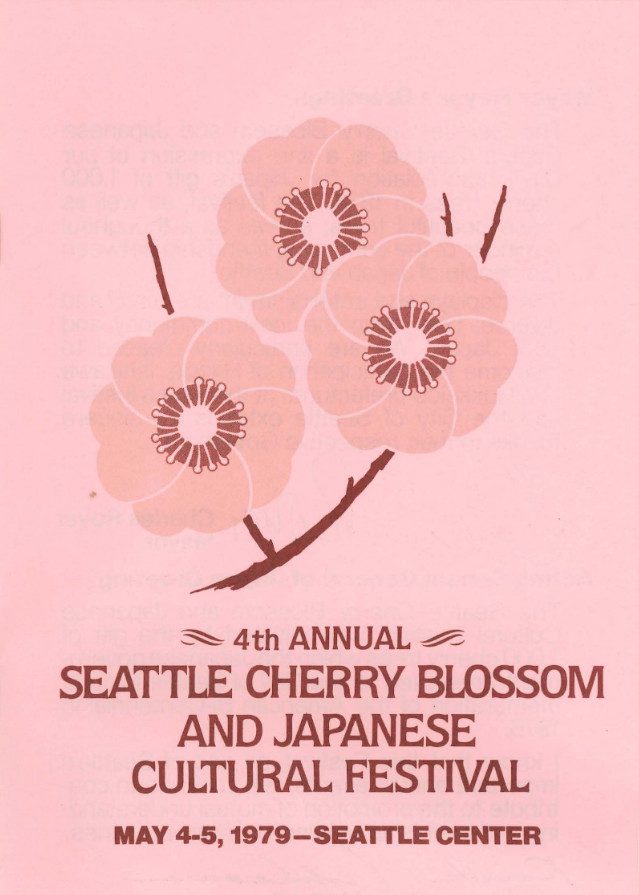
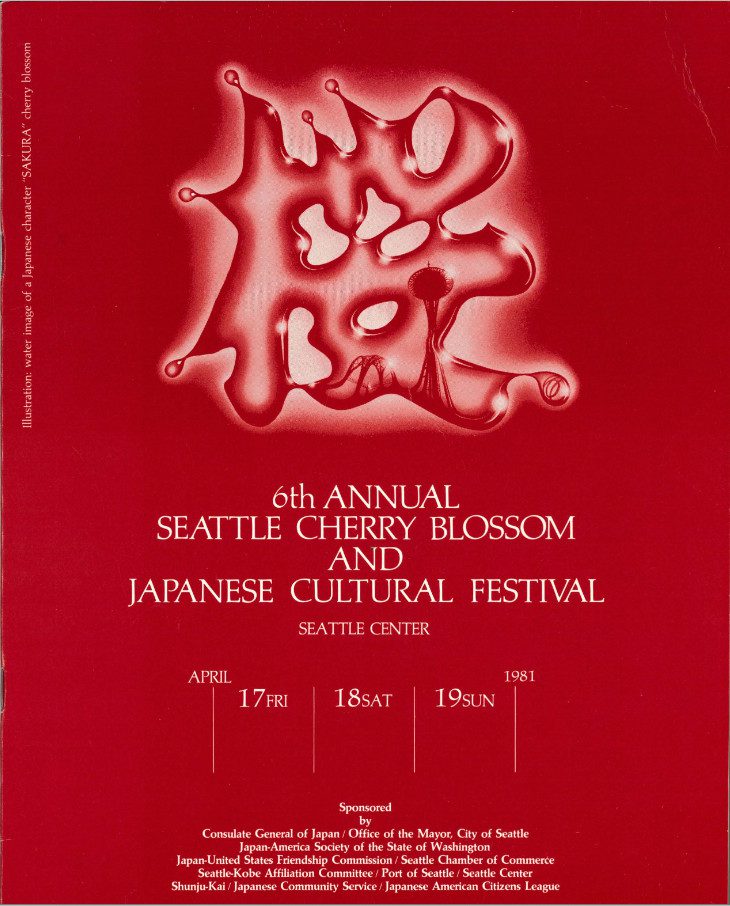
Click on the images to see the full programs. The 51st annual festival will take place in April at Seattle Center.