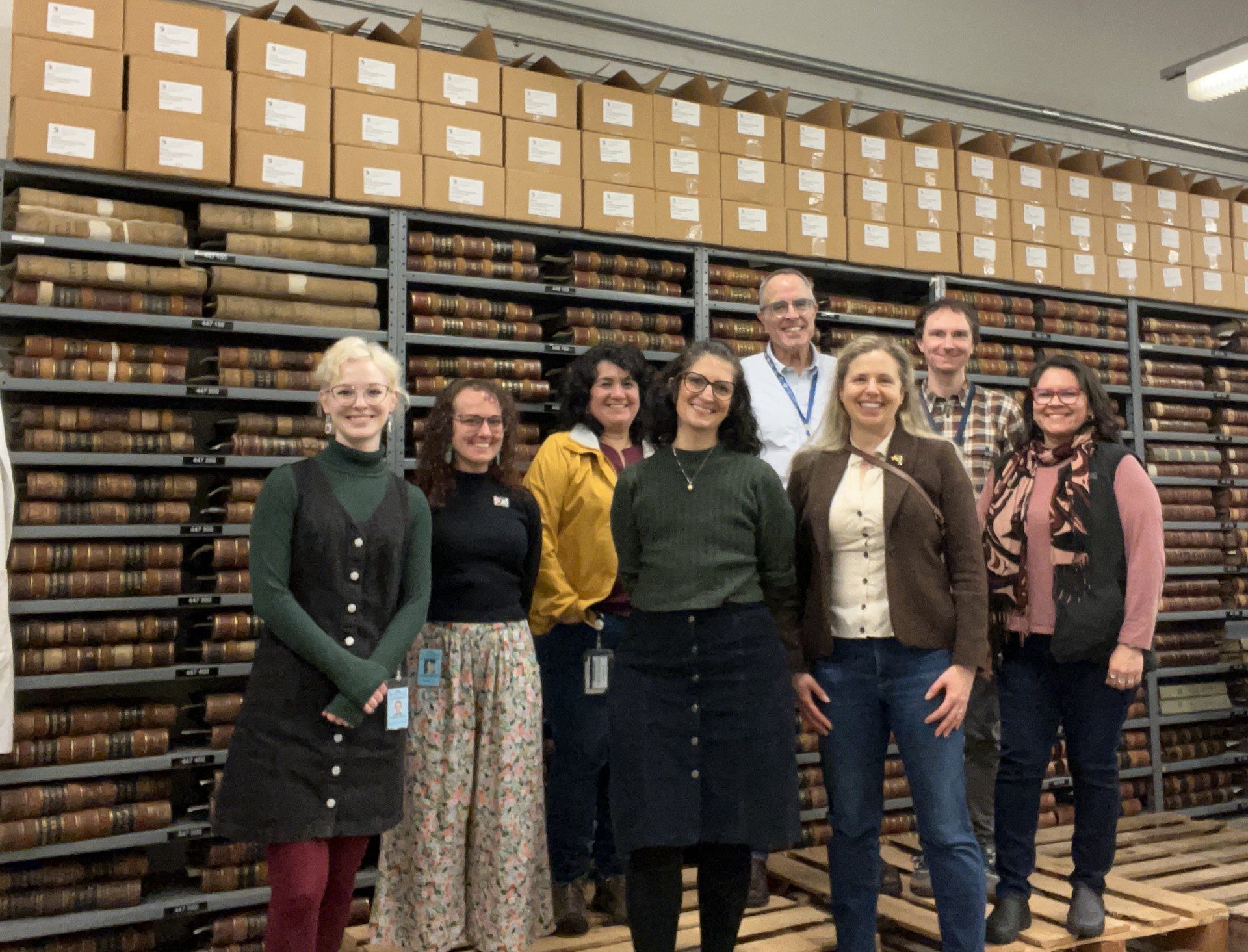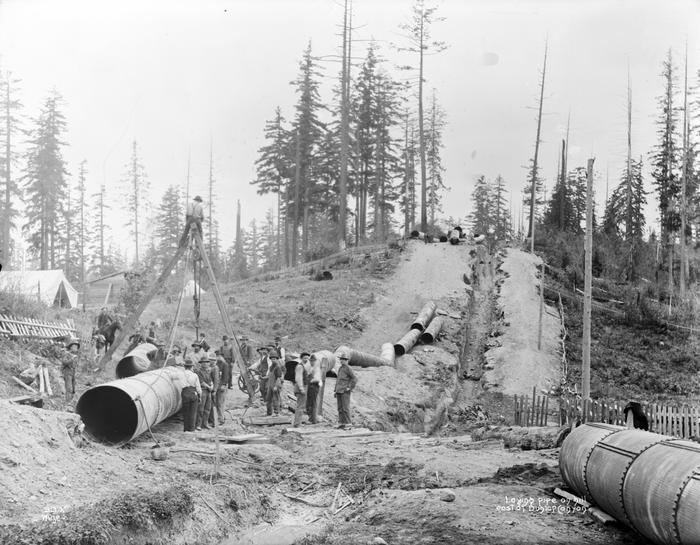
SMA archivists and staff from the Cedar River Watershed recently traded visits to learn more about each other’s work and discuss preservation of records. The watershed is an important part of Seattle’s history as well as its current infrastructure, and records created and held there are vital to understanding the role it has played in the city’s development.
In October, archives and records management staff took a field trip to the Cedar Falls Education Center, where we saw their library and archives and records storage and discussed their records-related questions and concerns. We were also treated to a tour of the historic district, Chester Morse Lake, Cedar Falls, and other sights in the watershed. We enjoyed seeing the work these Seattle Public Utilities employees do and the beautiful setting where they do it!
An added bonus was seeing the public art work Rain Drum Courtyard by Dan Corson at the education center. Funded by Seattle’s 1% for Art program, the work consists of 21 drums along with artifacts from towns that previously existed within the watershed. Water hits the drums in preprogrammed rhythms that constantly change. Check out this Seattle Channel short to hear from the artist about how he was inspired by the landscape to make the piece.
This week, watershed staff came to visit the archives and learn more about how we preserve City records and make them accessible. They had many good questions about storage, cataloging, preservation, and all things archives.
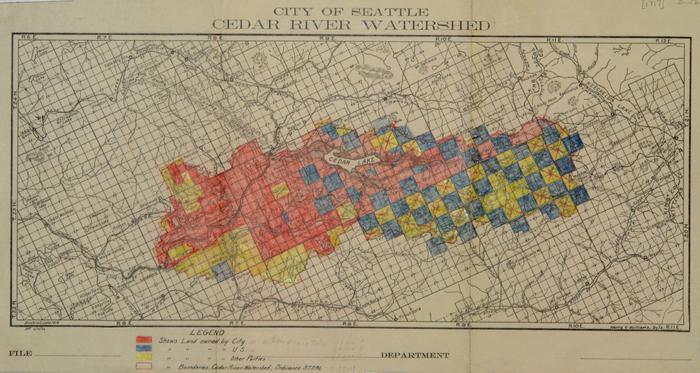
Among the records documenting the watershed we pulled for their visit was a ledger of supplies for Cedar River Watershed cook and bunkhouses in 1918 and 1919 (Record Series 8201-03), as well as annual reports, brochures, and other publications from the Seattle Water Department. There was also a variety of photographs, textual records, maps, and reports to browse through, and over lunch the group watched a 1954 Water Department documentary about the watershed (viewable in our Digital Collections).
We look forward to continuing to join forces to safeguard watershed history. SMA is always happy to work with City departments to learn about what they do and discuss how we can help them preserve their historic records. These partnerships help us ensure we are keeping a robust and complete record of City programs for future researchers to dig into!