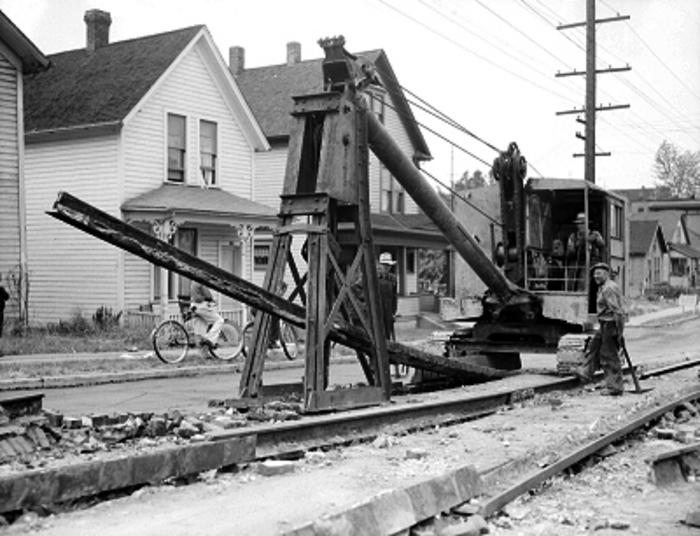
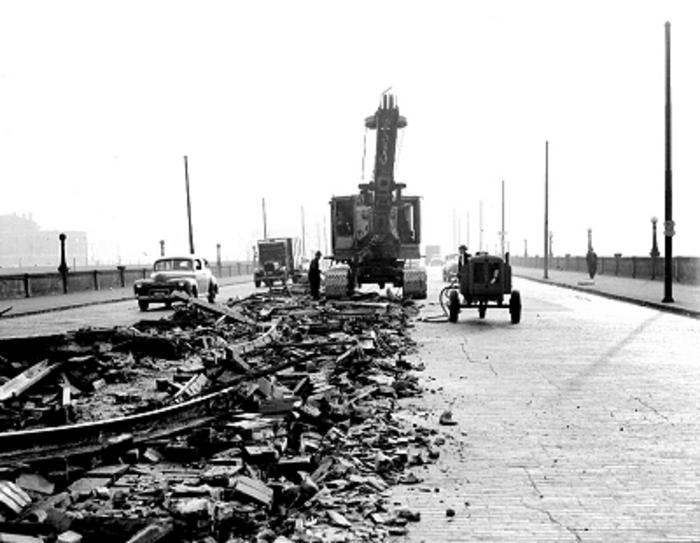
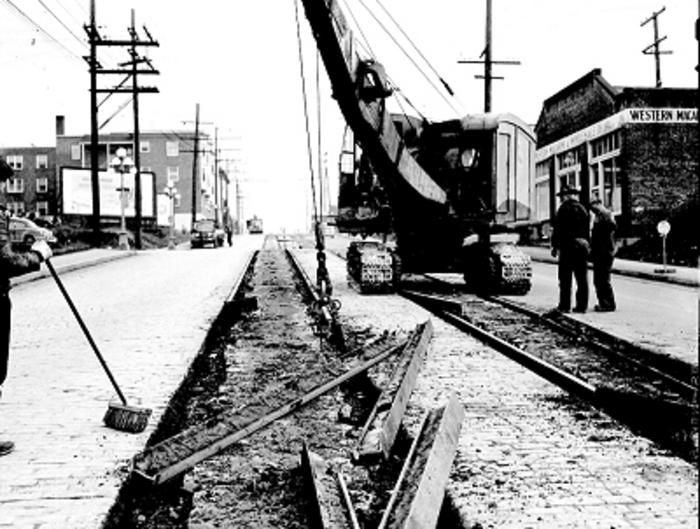
In the early 1940s, City Engineer Charles Wartelle oversaw a project to remove streetcar rails from city streets after buses had replaced the old trolleys. In an article for Public Works Magazine describing the project, he wrote that about 27,500 tons of steel rails on 100 miles of streets were removed by the transit system, the City, and a government agency called War Materials, Inc. The steel was sold to local mills, with proceeds put toward resurfacing the streets, many of which were brick.
The project was not without its hiccups. According to several letters from Wartelle, contractors had a tendency to pull out large sections of rail and then move on to another street while the first was still torn up. There were also issues with a lack of barricades and safe crossings. Unsurprisingly, this caused complaints from the public.
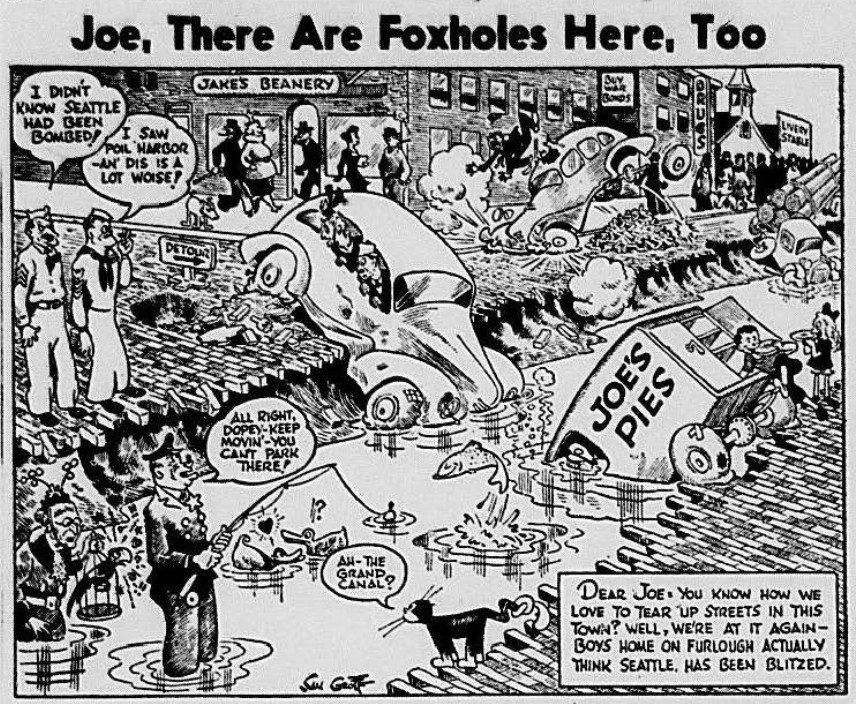
In a satirical letter to a fictional GI away at war, Seattle Times columnist Robert Mahaffey described “the streets chopped up like a cubed steak” and Street Department experts who sat up at night plotting booby traps for drivers and pedestrians. “You ought to see the streets these days. Furloughed service men who happen to drop in keep ducking and looking around for foxholes. The place looks as if it had been blitzed.” He claimed that two men fell into one of the craters and “darned near starved to death” before being rescued. Reporting on the general mood, he wrote, “Edgy citizens, however, are coming to regard the thing as a gigantic plot to discourage motoring.”